



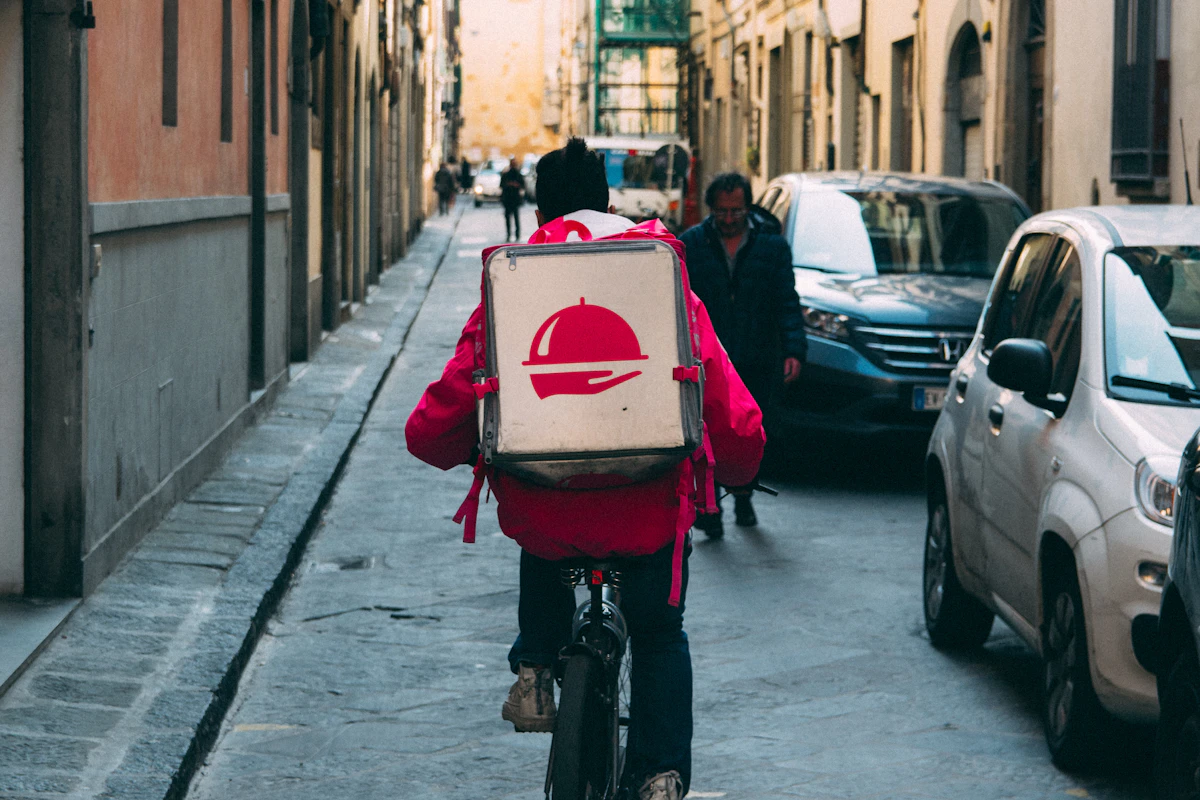
The 15-Minute Logistics Challenge #
Hyperlocal food and grocery platforms operate on razor-thin delivery windows. When an order is placed, three critical clocks start ticking simultaneously:
1. **Merchant Prep Time:** Kitchen or dark store picking & packing (5–8 minutes). 2. **Driver Assignment & Ingress:** Finding the nearest active rider travelling toward the merchant (3–5 minutes). 3. **Last-Mile Transit:** Dispatching the rider to the customer's doorstep with turn-by-turn routing (4–7 minutes).
At Divanex, while architecting the multi-vendor **Fynito delivery platform**, our core challenge was eliminating the "dispatch lag" where orders waited 30–60 seconds simply searching for a driver.
---
Uber H3 Spatial Hexagonal Clustering #
Traditional radial distance queries (`ST_DWithin` in PostGIS) require continuous spatial index scans that degrade under thousands of active GPS pings.
Instead, we map geographical coordinates into discrete **Uber H3 Resolution 8 & 9 hexagons**:
import { latLngToCell, gridDisk } from "h3-js";

export function findEligibleDrivers(merchantLat: number, merchantLng: number, maxRadiusHops = 2) {
  // Convert merchant coords to Resolution 8 H3 Index
  const merchantHex = latLngToCell(merchantLat, merchantLng, 8);

  // Get all neighboring hex cells within distance
  const searchRing = gridDisk(merchantHex, maxRadiusHops);

  // Query Redis In-Memory Hash Set for active riders in these cells
  return redis.sunion(...searchRing.map(hex => `riders:cell:${hex}`));
}
By organizing riders into in-memory Redis sets partitioned by H3 cell ID, driver discovery latency dropped from **420ms to under 14ms** across 15,000 concurrent delivery riders.
---
Dynamic Order Batching & Route Optimization #
When two customers in the same residential apartment complex order from neighboring restaurants within 3 minutes of each other, assigning separate riders doubles operational costs.
Our batching engine evaluates: - **Angle Alignment:** Rider trajectory must not divert by more than 15 degrees. - **Thermal Decay Threshold:** Hot food must never sit in transit for longer than 18 minutes total. - **Dynamic Payout Multipliers:** Automatically crediting the rider with a 1.4x bonus while reducing platform delivery cost by 35%.
---
Battery-Efficient Driver Telemetry (MQTT vs WebSockets) #
Continuously polling GPS on mobile devices burns rider batteries in under 4 hours. We implemented an adaptive throttle protocol: - **Rider Moving (> 15 km/h):** Transmit GPS packet every 3 seconds over lightweight MQTT with QoS 0. - **Rider Stationary (Traffic light / Waiting at Restaurant):** Back off GPS broadcast interval to every 15 seconds. - **Device Standby:** Wake on high-priority geofence entry events using native iOS/Android background location fences.
---
Key Architectural Takeaways #
- Pre-compute spatial indexes with H3 to keep real-time matching strictly in-memory. - Use MQTT gateways for high-frequency IoT/mobile telemetry to save 70% mobile bandwidth and 45% device battery. - Always implement deterministic idempotency keys on driver assignment transactions to avoid split-second race conditions.